Wind Turbine Blade Root Insert Gap
The package for detection of Blade Root Insert Gap from enervisual is a direct and accurate method. Sensors designed to measure the gap between blade root and blade beari…
Read article →

Battery-wireless blade monitoring
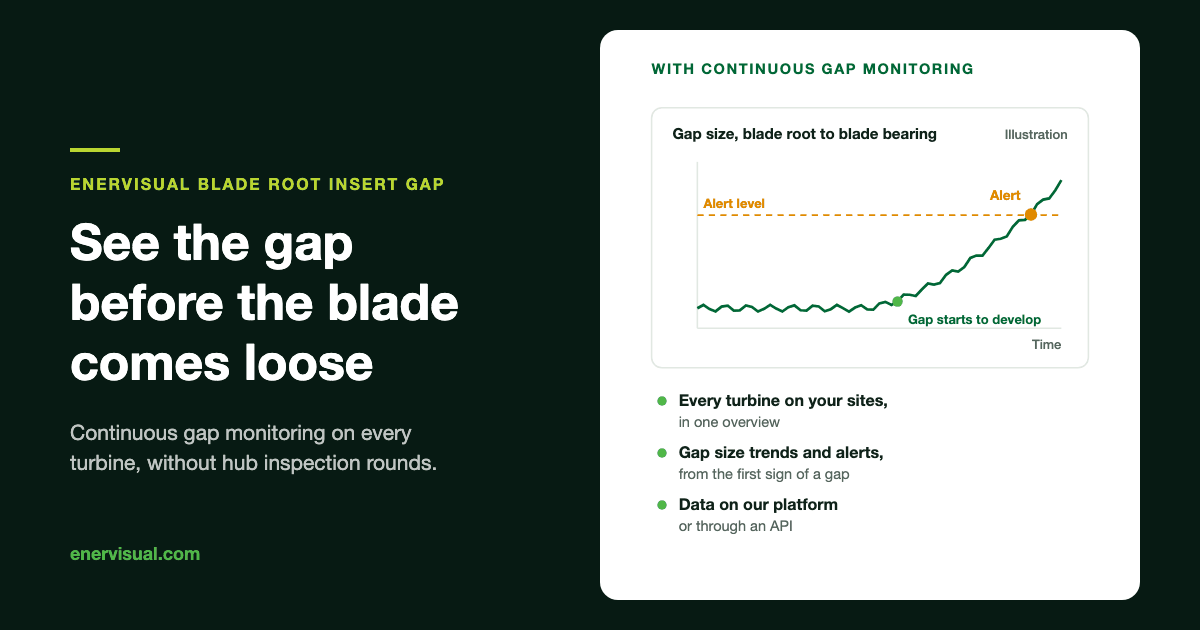
Direct measurement of the gap between blade root and blade bearing, on every blade of every turbine on your sites. See a gap from its first sign, know exactly which blade it is on, and follow it, instead of stopping turbines to look for it in the hub.
The problem
Blade root insert defects occur on old and new turbines alike. As the defect develops, a gap opens between the blade root and the blade bearing. Left alone, the blade can detach from the hub, with a serious safety risk and the danger of the blade striking the tower.
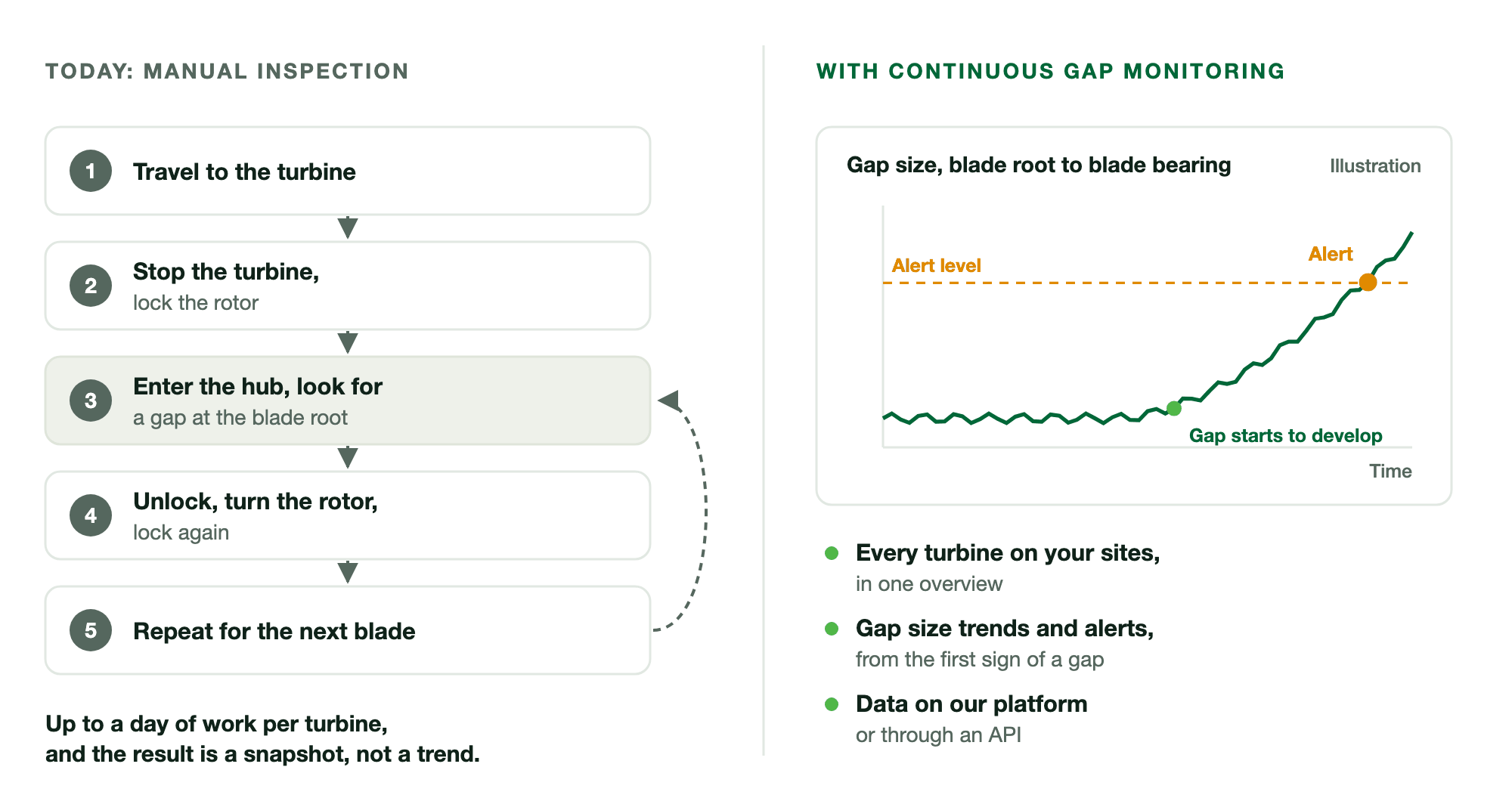
Finding the gap today is manual work: travel to the turbine, stop it, lock the rotor, enter the hub and look, then unlock, turn the rotor and repeat for the next blade. That is up to a day per turbine, and the result is a snapshot, not a trend.
What you get
Sensors inside the blade root measure the gap between root and blade bearing in millimetres. As the rotor turns, the weight of the blade loads the root in tension and compression: a sound joint stays closed at 0 mm, a loosening insert lets it open and close once per revolution.
Gap size is trended over time, so a developing gap is visible from its early phase and its growth can be followed until the repair.
You are alerted when a gap grows, with the turbine and the exact blade, instead of finding it at the next inspection round.
All turbines on all your sites in one view, without travelling to each one, stopping it and entering the hub.
Battery-powered sensors with a long battery life and no cabling, for old and new turbines alike, at an installation cost that makes fleet-wide retrofits realistic.
Hosted on the enervisual platform or delivered through the API, and integrated with the monitoring systems you already use.
Who it is for
Know that your turbines are safe for production, across every site, and take the gap check out of the routine hub inspection.
Replace stop-lock-inspect rounds with a continuous view of every turbine you maintain, and plan blade repairs from trends instead of surprises, knowing exactly which blade to work on.
A gap found in its early phase can be followed closely, with alerts as it develops, until the repair is done.
Getting started
Turbine types and sites. We tell you how the package fits them.
Battery-powered and wireless at the blade roots, with no cabling.
Gap trends and alerts for every turbine on our platform, or through the API in your own systems.
FAQ
The gap between the blade root and the blade bearing, in millimetres, measured directly by sensors inside the blade root. As the rotor turns, the weight of the blade loads the root alternately in tension and compression. A sound root joint stays closed at 0 mm; with a developing defect it opens and closes once per revolution. Gap size is trended over time and alerts are raised when it grows.
Small gaps show clearly. In one example, a blade with a gap of 0.6 mm showed a distinct opening and closing as the rotor was turned through a full revolution, while a sound blade root shows 0 mm. That makes a gap visible in its initial phase.
Yes. Each blade is measured on its own, so a gap and its alert point to the exact blade on the exact turbine. The team knows which blade to inspect and repair before travelling to the site.
It is the sign of a developing blade root insert defect. Left alone, the blade can detach from the hub, with a serious safety risk and the danger of the blade striking the tower. Detecting the gap in its initial phase is what prevents that.
It takes the gap check out of the routine inspection. Instead of stopping each turbine, locking the rotor and checking each blade by hand, you see the gap on every turbine continuously.
Blade root insert defects occur on both old and new turbines, and the package is a retrofit for both. Tell us your turbine types and we will tell you how it fits.
Yes. The data is hosted on the enervisual platform or available through the API, and it can be integrated with the monitoring systems you already use.
Tell us your turbine types and sites. We will show you what continuous gap monitoring would look like for your fleet.